Showing posts with label topophilia. Show all posts

Thursday, May 16, 2013

The fascination of Topophilia and place


Image above: The A life revealed - fascinating! National Geographic girl, her eyes have captivated the world since she appeared on the cover of National Geographic magazine in 1985. Now here is her story.   Interestingly the picture was almost not published!

Related links
Geogaction
Spatialworlds website
Australian Geography Teachers' Association website
'Towards a National Geography Curriculum' project website
Humsteach blog

GeogSplace blog
Geographical thinking Scoop.it
Spatial literacy Scoop.it
History and geography Scoop.it
Spatial Education and technology Scoop.it

Follow Spatialworlds on Twitter

Email contact:

manning@chariot.net.au

Where am I??  

Adelaide, Australia: S: 34º 55' E: 138º 36'


A love of place: "...we are either place-oriented or people-oriented."

“People think that geography is about capitals, land forms, and so on. But it is also about place — its emotional tone, social meaning, and generative potential.” — Yi-Fu Tuan, Professor of Geography

Yi-Fu Tuan is a humanist geography, who popularised the term Topophilia in geography in the 1970s as a way to counter what humanists saw as a tendency to treat places as mere sites or locations. Instead, Yi-Fu as a humanist geographer argued, the places we inhabit have as many personalities as those whose lives have intersected with them, and the stories we tell about places often say as much about who we are, as about where our feet are planted.
Humanist geography is a branch of geography that studies how humans interact with space and their physical and social environments. It also looks at the spatial and temporal distribution of population as well as the organisation of the world’s societies. Most importantly though, humanistic geography stresses people’s perceptions, creativity, personal beliefs, and experiences in developing attitudes on their environments.
Time, age, sadness, loss, goodness, happiness, and the concept of home are all themes Yi-Fu Tuan explored at length in his more than 20 books, including his best known works, "Topophilia", “Space & Place,” and his most recent book, “Humanist Geography: An Individual’s Search for Meaning.”
I first came across the work of Yi-Fu Tuan as a geography student at Adelaide University when he visited Adelaide in 1973. His work fascinated me and really enriched my perception of what geographical thinking was about (beyond things, distribution and location). As we have been writing the Australian Curriculum: Geography and developing the concept of place in the curriculum, the work of Yi-Fu Tuan has again resonated with me. The recent article on Yi-Fu Tuan was a real insight into his thinking and commitment to the concept of place as part of modern geography.  Hence I thought it was time to do a Spatialworlds posting on topophilia in relation to the place of place in the new curriculum.

Topophilia (From Greek topos "place" and -philia, "love of") is a strong sense of place, which often becomes mixed with the sense of cultural identity among certain peoples and a love of certain aspects of such a place.
The question asked in Yi-Fu Tuan,s book, "Topophilia: A Study of Environmental Perceptions, Attitudes, and Values" is what are the links between environment and world view? Topophilia, the affective bond between people and place, is the primary theme of Yi-Fu's work as he examines environmental perceptions and values at different levels: the species, the group, and the individual. Yi-Fu Tuan holds culture and environment and topophilia and environment as distinct in order to show how they mutually contribute to the formation of values.

"Topophilia" examines the search for environment in the city, suburb, countryside, and wilderness from a dialectical perspective, distinguishes different types of environmental experience, and describes their character."

During the 1960s and 1970s, the idea of place in determining people's behavior was at the forefront of human geography and replaced any attention previously given to space. In his 1977 article, "Space and Place: The Perspective of Experience," Tuan argued that to define space, one must be able to move from one place to another, but in order for a place to exist, it needs a space. Thus, Tuan concluded that these two ideas are dependent upon one another.
Whilst searching for materials on topophilia on the Internet I came across this interesting treatment of the term in film. Topophilia: a journey home, a rediscovered identity is a short film about our connection to the landscape we inhabit and the feeling it can inspire.

In short, topophilia is the affective bond between people and place. Topophilia is a very important term to explore as we look at the concept of place in the Australian Curriculum: Geography. As I have conducted professional learning on the concepts in the curriculum, the discussion often turns to the difference between space and place. To teach the Australian Curriculum: Geography well and as intended, there is a need for geography teachers to engage with the term Topophilia so that they can see that place and space are very different and that place is a very rich concept to enhance the teaching of geographical thinking in the classroom.




Thursday, October 20, 2011

The place of place in space?


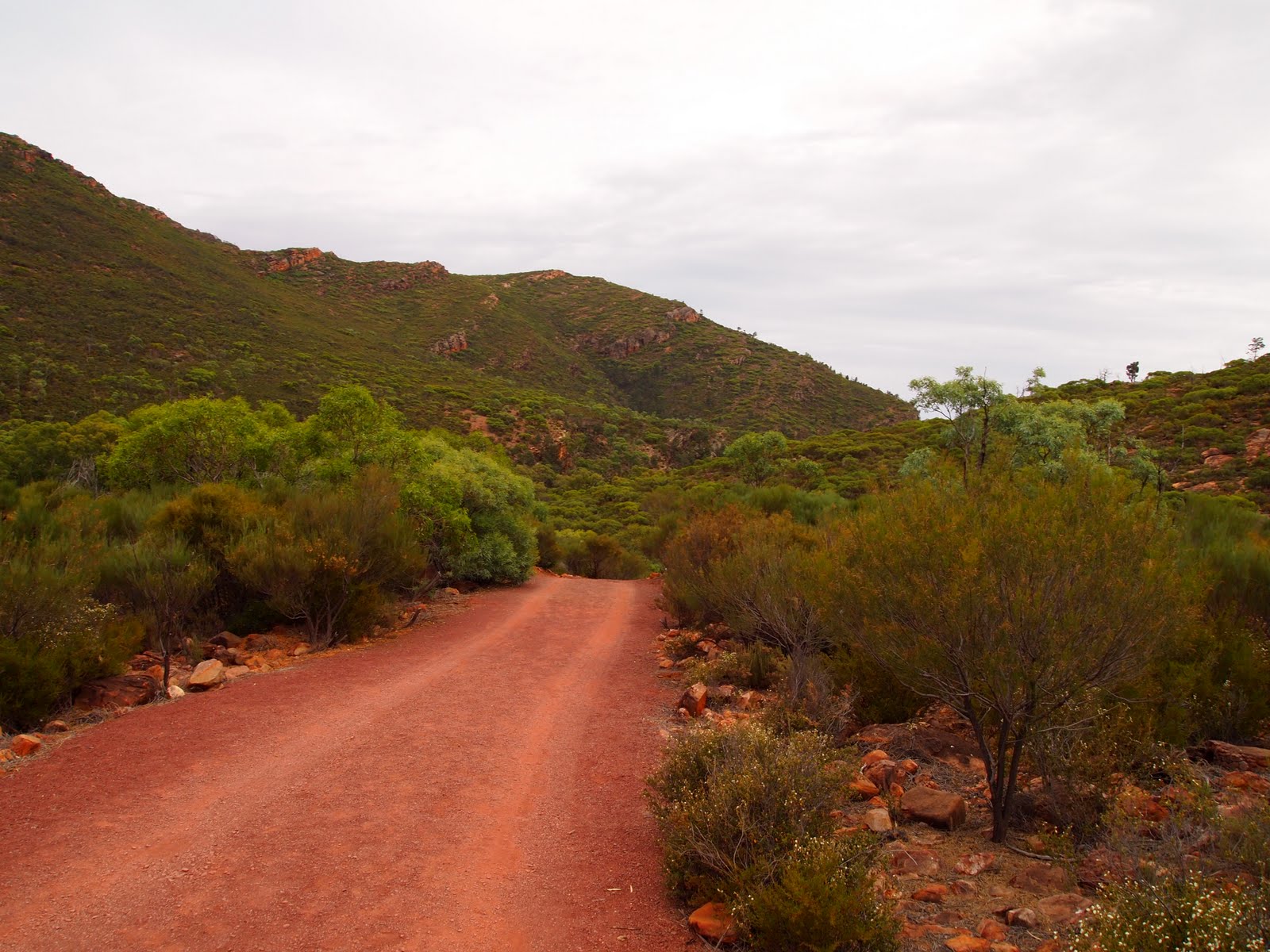
Left image: Red dust, strata and vegetation, Flinders Ranges, South Australia.
Right image: Sunset across the plains, Flinders Ranges, South Australia.

Related sites to the Spatialworlds project
Spatialworlds website
21st Century Geography Google Group
Australian Geography Teachers' Association website
'Towards a National Geography Curriculum' project website
Geography Teachers' Association of South Australia website
Email contact
manning@chariot.net.au

Where am I??
Hobart, Australia: S: 42º 50' E: 147º 20'

Place and space: the difference?

In previous postings I have explored the nature of the concepts of place and space. An outcome of such discussion is usually a need to articulate the difference between place and space for the non-geographer (and geographer in fact). What essentially is the difference?

The following work from Massey and Cresswell is a very useful delineation of the difference between place and space:

“Space and place are often merged together in the geographical imagination but space is more abstract than place. We begin with undifferentiated expanses of space and then we identify with certain parts of space, get to know them better endow them with value, then name and identify them as places. It is people that form place. Space is a locale that is made into a place by human intent. A place is given its personality by human relationships across space. It is produced through connections to the rest of the world, particularly the movement of people but also commodities and ideas (Massey,1991, Cresswell, 2004).”

Most importantly it is the humanistic interpretation of place that is at the centre of place study for the cultural geographer. This sense of place is fundamental when exploring the connection of people to place and their sense of place. However the term sense of place has been defined and used in many different ways by many different people.

“To some, it is a characteristic that some geographic places have and some do not, while to others it is a feeling or perception held by people (not by the place itself). It is often used in relation to those characteristics that make a place special or unique, as well as to those that foster a sense of authentic human attachment and belonging.”

Others, such as geographer Yi-Fu-Tuan have pointed to senses of place that are not inherently "positive," such as fear.”

The work of Yi-Fu-Tuan is particular interesting in this area. His work called “Topophilia: a study of environmental perception, attitudes, and values” had significant impact on the area of human geography since the 1970’s and is an area I would love to see geography classes engage in.

Topophilia means literally love of place. It is a term used to describe the strong sense of place or identity among certain people It can be defined widely so as to include all emotional connections between physical environment and human beings.

In 2001 I conducted a GIS project with my students, called Streetscapes, which on a small scale I tried to get students to determine through specific criteria why every street has a different feel and sense of place.

In fact, to add or clarify the confusion about place and space, Yi-Fu-Tuan contends in his book Space and Place: The Perspective of Experience, that:

“… place is defined as a particular part of space that can be occupied, unoccupied, real, or perceived.”
“a space requires a movement from a place to another place. Similarly, a place requires a space to be a place. Hence, the two notions are co-dependent.”


Yi-Fu-Tuan went on to say that:

“…the ways in which people feel and think about space, how they form attachments to home, neighborhood, and nation, and how feelings about space and place are affected by the sense of time. He suggests that place is security and space is freedom: we are attached to the one and long for the other.”

As what often happen in this area of geographical conceptualisation, one can get more confused the further one reads. Can I suggest that a read of some of Yi-Fu-Tuan’s work is well worthwhile to see that place and space are more than just dimensions and patterns to be mapped but are determined by human perception, sense of belonging and attachment. It certainly enriches the study of the key concepts of place and space in the Australian Curriculum: Geography. The following edited extracts from the draft Australian Curriculum: Geography released this week clearly shows that the writers have been influenced by the modern geographical work on place and space outlined above. For example:

Place

“A place is a specific part of the Earth’s surface that has been named and given meaning by people, and these meanings may differ. The concept of place, however, goes well beyond the study of places and is about a way of understanding, explaining and thinking. In particular in involves exploring people’s aesthetic, emotional, cultural and spiritual connections with places; the role of places in their own feelings of identity, sense of place and belonging; and the ways they experience and use places. It is to be recognised that places may be altered and remade by people, and that changes promoted by one group may be contested by others.”

Space

“Space in geography is the three-dimensional surface of the Earth. While history studies change over time, geography studies difference across space, and has a particular interest in understanding the rich diversity of environments, peoples, cultures and economies that exist together on the surface of the Earth.
The study of space in geography recognises that people perceive and use spaces differently, and may feel accepted and safe in some and unwelcome or unsafe in others.”