Showing posts with label Place. Show all posts

Sunday, February 21, 2016

A perfect place to explore place


Image above: An advert for a new store that highlighted that a space is only a space until it turns into a place!  By the way the new shopping area was to be called 'Rundle Place'.

Related links to Spatialworlds
GeogSplace (a teaching blog for Year 12 geography)
Geogaction (geography professional learning blog)
Spatialworlds website
GeogSpace

Australian Geography Teachers' Association website
manning@chariot.net.au


“Our relationships with places are as necessary, varied, and sometimes perhaps just as unpleasant as our relationships with other people.”   
                                                                                  Place and Placelessness, TedRelph  1976

This posting is dedicated to the blog, called 'Placeness, Place and Placelessness'.
It is the blog of Ted Relph in which he explores the concept of place, sense of place, spirit of place, placemaking, placelessness and non-place, and almost everything to do with place and places. Ted started the blog in 2015 and has put together some fascinating postings that reinforces and challenges our understanding of the concept of place. There are numerous Spatialworlds posting on the concept of Place but I was very excited when I came across Ted's blog because it takes the concept to the next level and beyond a simpleview of the concept. 


Place in my experience is not a simple, centred and enduring phenomenon.

Ted, as placeaphile (not sure if this is a word but Ted makes up plenty of place related words in his blog), has been writing about place since 1976, a long time before we started to write the Australian Curriculum: Geography in 2009. His writings certainly makes one think about the fact that there is much more about the study of place than meets the eye. Coupled with the wonderful writings of Yi-Fu Tuan on Topophilia back in 1970, the blog just adds new dimensions, perceptions and complexities to the study and concept of place. Most importantly the blog makes us very aware of the richness of the concept for students and teachers. 


Place is a fundamental concept in the Australian Curriculum: Geography - in fact it can be argued that the emphasis on the modern interpretation of place is what makes the Australian Curriculum: Geography a 21st Century Geography curriculum. As the writings on the Ted's blog show, the concept of place is a complex and multi-dimensional one that goes way beyond the traditional view of place in geography. 

As Ted says:

 “Our relationships with places are as necessary, varied, and sometimes perhaps just as unpleasant as our relationships with other people.”

It is this human construct of the relationship of individuals and groups with place that makes the place concept what it is - in fact it can be argued that a location is only a place when it has been given a name and/or people relate to a location and give it a sense of meaning that links into their identity.

The blog provides discussion on topics such as: topophobia, topophila, spirit of place, place names and mobility and place. 

As a new blog I look forward to what postings Ted creates in months to come. Ted has been quiet since November 2015 (maybe he is in another place?) but he says that he plans to write entries on topics such as the experience of place, pride of place, power of place, displacement, border and boundaries, art and place, nostalgia, site and situation, gender and place, ecology of place, placenessness, books about place and experience of place - they sound fascinating and I look forward to read them in 2016 - what this space (or is it place?). 

Place has changed for ever


Whilst on about Place, this interesting Ted Talk from David Houle, a futurist, thinker, and speaker, who explains how technology, specifically cell phone ubiquity, has radically altered the notion of place in modern society.

A sense of Place from Space


This talk from Joseph Allen, a retired NASA astronaut who flew aboard space shuttles Columbia and Discovery makes us think about the sense of Place on a broader scale .


Saturday, January 23, 2016

The diversity of place


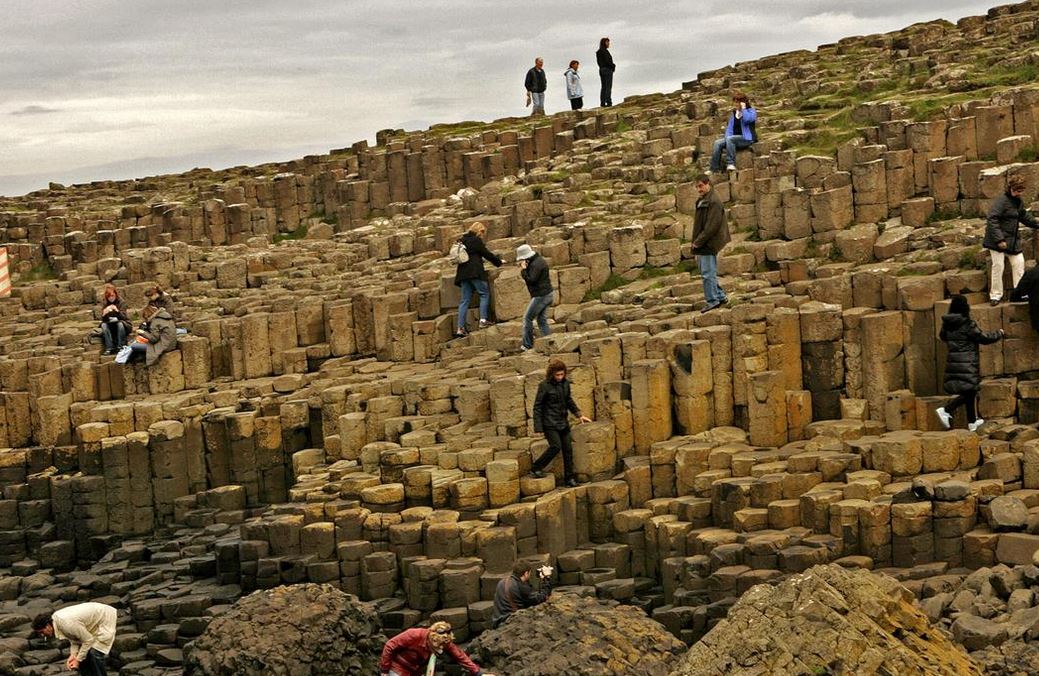
This post contains links to a lot of pictures, but extraordinary and amazing pictures showing the diversity of the places of the Earth -  the beautiful, unusual, weird, strange, dramatic, unbelievable and extraordinary places that make up our world. 

As previously mentioned on the Spatialworlds blog (over and over), the concept of place is incredibly important as a concept in the Australian Curriculum: Geography. We have talked about place in terms of providing people/cultures with identity, providing meaning to a people and/or individuals, the love and aesthetics of place (topophilia) and the nature of place - all rich conceptual ideas about place. However this post is purely about two things in relation to place:
  • the amazing diversity of places around the world
  • the uniqueness, beauty and quirkiness of the places of the world.
Sometimes we just have to stop and take in the wow of the places of the world and marvel at the wonders of the world. Enjoy the following galleries of places with a difference and/or a significant wow factor beyond the normal suburban world many of us live in.


Monday, May 18, 2015

The significance of place


Image above: Mapping famous deceased.

Related links to Spatialworlds
GeogSplace (a teaching blog for Year 12 geography)
Geogaction
Spatialworlds website
GeogSpace

Australian Geography Teachers' Association website
manning@chariot.net.au

Where am I??

Adelaide, Australia: S: 34º 55' E: 138º 36'


 Mapping everyone and everything

Increasingly sites are appearing on the Internet that show that there is an unquenchable appetite to create a map of almost anything in any place. Here are just a few interesting sites that log-into the significance of place  -  as the resting place of the famous and the literacy nature of a place.


This Grave Atlas Shows Where to Find the Distinguished Deceased

We know where the bodies are buried ... take a virtual tour of world cemeteries that host famous artists and rogues.


This site was launched during the last Haloween period and was sold as: 

"Commune with the dead this Halloween, and check out the final resting places for more than 50 of history's most iconic figures. This eerie atlas lets you explore the lives and deaths of actors, authors and outlaws via maps of famous graves, from Bob Marley's mausoleum in Jamaica to Mary Shelley's tomb in Dorset."


 Books and place

This site gets one thinking about what it means for a story to not just be from a place, but also of it, and why it is that some places have an abundance of literary riches, while others don’t. There are plenty of maps pairing books with states in the United States, but those maps tend to signify the fame level of the books rather than their literary merit; they also tend to be dominated by white men, most of them dead. The best book for every state map comes up with a list which is more than just a general reflection of a place. 

No one book, after all, can completely capture the spirit of something so unwieldy as a state. Few—if any—books can even completely capture the spirit of an individual. And yet there are those stories that so beautifully evoke a time and a place and a way of life that it becomes close to impossible to separate the literary perception of a place from its reality—one winds up informing the other.

Screen Shot 2014-10-17 at 7.46.58 PM
 Illustration by Sarah Lutkenhaus

Another more localised literary map is the literary map of Brooklyn, highlighting the books that are considered as best representing the neighborhoods in which they were set.


An interesting link between English and geography that should be explored!


 Megacities interactives

 Whilst on about a city, the following interactive map of megacities is worth a look.


By 2025, the developing world will be home to 29 megacities. The interactive map explores the latest UN estimates and forecasts on the growth of these 'cities on steroids', and takes a look at the challenges and opportunities megacities present for the tens of millions living in Lagos, Mexico City and Dhaka."


Thursday, July 17, 2014

An interesting take on attachment to place: not just sets!


Image above: The West 81st Street address that was home to Jerry, Kramer, and Newman can still be found on a quiet block between Amsterdam and Columbus avenues.

Related links to Spatialworlds  
Geogaction
Spatialworlds website
GeogSpace

Australian Geography Teachers' Association website
manning@chariot.net.au    

Where am I??  

Adelaide, Australia: S: 34º 55' E: 138º 36'


The Geographic Legacy of 'Seinfeld'

Although focussing on the Seinfeld comedy series, the example profiled in this posting provides the opportunity to explore the concept of place and peoples attachment to place from afar - that is attachment to place, even though an individual has never been to that place, but only experienced it through their TV screens. In fact, there is an industry across the world built around an individuals attachment to place through paintings, plays, books, movies and television. When visiting a place a person wants to see it 'in the flesh', to feel and sense the actual place that they had lived and experienced through the art form. Although attached to a place through their imagination, a person can often be disappointed that although the place looks physically the same, it no longer exists as they imagined because the human component that was an integral part of their attachment to the place from afar is no longer there. The human component that gave the individual their attachment and sense of place no longer exists. Even so the person still wants to visit the place to let their imagination make what it can of the place as it is. 
If this sounds all rather indulgent and somewhat abstract, I feel that the example of the Seinfeld places in New York and peoples fascination with seeing these places is a great chance to elucidate the richness of the place concept in the Australian Curriculum: Geography - to draw out the aspect of the concept which is very much a human construct. If nothing else, if you were/are still a fan of Seinfeld, why not let your geographical imagination about place run wild by flicking through the 'real' locations out of "the series about nothing". As the site says, "why not make maps about nothing?" ... but is it about nothing? It really is about our attachment to the place Seinfeld and his friends occupied!

  Taking the discussion one step  further, why not get students to do a virtual study of the locations in their favourite television show (or whatever art form they wish) and draw a map of the sites and embed images for each of the places identified. There certainly are tours of the Seinfeld sites (the one conducted by the real Kramer certainly would play with your mind!), Sex in the City tour, The Lord of the Rings Middle Earth sites in New Zealand, the bar from Cheers and the sites in New York from Friends - I am sure there are many more such place based tours. The difference with these tours compared to a tour of famous iconic places is that with these sites we feel a very strong attachment to (rather than just fascination with) because we feel that we have actually visited the place through the characters we enjoyed and in many cases identified with - the characters and the places they inhabited became part of our lives and geography.


 The Seinfeld locations: Maps about nothing! 

* The attached site is a digital reality tour of five classic New York locations still existing, and five since gone. 


* Part of the site provides a spatial guide to New York and scenes from the series.

As much as Seinfeld is a show about nothing, it's also essentially a show about New York. No other series integrated Manhattan life into its story lines to a greater degree. As Jerry Seinfeld says: 
"It wasn't clear at the beginning that the city itself would be such a big character in the show."

The city supplied the "excruciating minutia" that kept the narrative motor running for a group of self-obsessed, over-analytical, otherwise-unoccupied characters (think about it: only Elaine had a steady job). Given the close connection between city and show, it seemed fitting to check on Seinfeld's geographic legacy as a place. The site profiles five classic Seinfeld spots still in New York to be visited, and five since gone.

Monday, June 2, 2014

The place of music with place


Image above: An image from Karl Jenkins music piece called Palladio.

Related links to Spatialworlds 
Geogaction
Spatialworlds website
GeogSpace

Australian Geography Teachers' Association website
manning@chariot.net.au    

Where am I??  
Adelaide, Australia: S: 34º 55' E: 138º 36'


In some form, music is a popular, constant and fundamentally important aspect of all cultures. The study called ethnomusicology has found that for cultures around the world, music not only provides entertainment and enjoyment but is also important in defining a place and its people. When we listen to any music, our geographical imagination takes us to a place we consider is the origin of the music. When listening to the instruments, voices, structures and rhythms of traditional/indigenous music we are taken to a place we associate with the music, whether Africa, South America, China, Ireland, Australia and so on. With modern music it is somewhat more difficult to associate the music with a place due to the global similarity of instruments and singing style. Even then, it is sometimes possible to pick a Celtic singer, instruments and song structures compared to a European music maker of the same genre. The Eurovision song competition is an interesting test of such a theory. I have even spoken to heavy metal fans who say that they can identify differences in voices, timings and song structure from place to place. Whilst not a music expert, it think it can be safely said that there is a strong link between place and the music of that place as an identifier of place.

The article titled Ethnomusicology and Place supports this view when it says that:


‘The relevance of ‘Place’ is that the environments in which individuals are subjects condition the formative construction of their and their ‘symbolism of self’. As well as influencing the formation of identity, an individual’s consumption of music is central to that persons ‘narrativization of Place’ whereby they make sense of the place in which they are situated. Thus there is reciprocity between individual and their space where both are defined in a constant process of identity negotiation and production’.


The article also provides some fascinating thinking on the changes to the connection of place to music as a result of technological change, in particular that:


‘The advent of media technologies and their use in the mass dissemination of  commercially produced music has played a significant role in the way that music is used to articulate notions of place.’


The article goes on to ask whether the world is becoming a ‘No Place Space’.  Have the processes of globalisation as a result of technology and the  mass dissemination of commercially produced music resulted in the ‘intermeshing’ of the local and the global and the blurring of geographical boundaries, meaning that individuals now exist ‘simultaneously in a local, a regional, and a global context’. They summise that this has led to the alteration of traditional conceptions of ‘Place’ as bounded entities separated in space and time, as often reflected in the difference of music from place to place. Are the local and the global becoming ‘inextricably bound together making it harder to see regional differences in fundamental cultural components such as music?'  The question is asked, "is it going to become harder and harder for people to have a sense of place beyond the global?" Music has always played a major role in providing place identity and meaning for people. Such questions go beyond the field of music alone (food, clothing etc) but they are certainly interesting to ponder when one considers the future of music attached to place.


My interest in the association of place and music was stimulated by the work of Karl Jenkins.  His work is an interesting study in trying to disassociate music from place and to not be a place identifier. The music Jenkins creates is often call world music because it comes from no particular place and is an amalgam of all sorts of music.  His music even goes so far as to not even have a language from any place but a ‘made-up’ vocalisation of sounds. As the commentary on his music says:
'Each Adiemus album is a collection of song-length pieces featuring harmonised vocal melody against an orchestra background. There are no lyrics as such, instead the vocalists sing syllables and 'words' invented by Jenkins. However, rather than creating musical interest from patterns of phonemes. The musical language of Adiemus draws heavily on classical and world music.'


As a composer, Jenkins breakthrough came with the musical work Adiemus. The Adiemus: Songs of Sanctuary (1995) album topped the classical album charts.


Interestingly, as you listen to his work you think you have a purchase on a place for the music but then another place appears in the music. Although some of the work has definite Celtic overtones, it does transport us to many places. The connection between place and music has been studied by cultural geographers for many years and it is an area worth discussing with students when exploring the concept of place in the Australian Curriculum: Geography. 


Here are just a few examples of the spatial aspect of music through maps of …


A map depicting locations that are mentioned in songs or locations of events that are alluded to in songs.   
   
* GeogSpace: the geography of Rock Festivals


·    * Music map: Finding an artist


Whilst music differences can be mapped across space, I have not been able to find such a map at this stage to include in this posting. What certainly can be said is that music provides a great discussion point on the aesthetics of place and the sense of and uniqueness of place, all of which adds to the richness of the ‘Place’ concept in the teaching of the Australian Curriculum: Geography. In short, music is very important in terms of the ‘meaning-making’ of place for people and in turn connecting the identity of people to a place. Furthermore this meaning-making of place through music is changing globally and possible diminishing in reality as we continue to globalise. The beautiful Adiemus music and the world music phenomena could just be part of such a change.