Showing posts with label cultural geography. Show all posts

Tuesday, December 2, 2014

The importance of cricket to place


Image above: Just a bat and cap, but meaning much more to those in a place.

 As a cricketer, you're part of a wider family. The cricket family. You automatically have a connection with others without even meeting. The passing of Phil Hughes has proven that, we are all shocked by it and genuinely feel for his family and friends. He was what we all hope to be, a genuine person and dedicated to what he wanted. This was never the way it was supposed to end, too soon. Sean Abbott, the entire cricketing world is also behind you. You are an innocent who never meant for this to happen. You have no reason to feel guilty. Rest in Peace Phillip, you were a once in a generation player, who touched the world.  
Manning McInerney


More than a game for many Australians

The geography of sport has been a recurring theme on this blog over recent years. Sport is an important cultural phenomenon and has geographical relevance in terms of the concepts of place, space, interconnection and change. Sport can be studied in cultural geography in relation to sense of identity and place and many aspects of sport can be mapped to show diversity across space. With the tragic events of the past week and the funeral of Phil Hughes today I thought the time was right to do some geography on cricket. 

The dedication above to Phil Hughes was written by my 22 year old son on Facebook last week.  I could not have said it any better and it shows the raw emotion the event exposed in many of us - people we never see cry were overwhelmed by emotion. Raw emotion which many of us find hard to explain. The rational side of us says that all those dieing in accidents is sad and deserve a similar emotional response but this one really hit home. Such a reaction is a complex amalgam of cultural importance of cricket, identity and meaning attached to place, hero worship, the tragedy and irony of the timing, the Australian love of the battler, his bush and fun loving quality and the waste of talent and potential for the future - they all combined to create an event many of us will always remember. Interestingly Michael Clarke in his eulogy at the funeral talked about spirit and attachment to a place such as the Sydney Cricket Ground (SCG) - a very real and heartfelt expression of the importance of place at this stage of his and others grieving.

This posting tries to unravel the geography of cricket. For example, to non-cricketing countries, the magnitude of Australians' and Indians' love for cricket is as incomprehensible as its feverish intensity. 

 A typical scene in cities and villages all over India, this one in Agra.

On February 4th India awarded the Bharat Ratna, its highest civilian honour, to Sachin Tendulkar, a recently retired batsman. Millions in India, a country of 1.3 billion people and only one nationally-popular game, celebrated wildly. When India's national side plays a big game, an estimated 400m watch on television. Yet cricket's take-off in India is a highly improbable development. The game is demanding to play properly, requiring space, a good turf pitch and expensive equipment—which only a relative handful of Indian cricketers have access to. Most will never strap on pads or bowl with a leather ball. The attached article asking "Why Indian's love cricket so much" is an interesting discussion for cultural geography. 


 A map showing the most popular sports around the world. India, Pakistan and Australia are the major countries where cricket dominates.

As the map above shows, the overwhelming majority of countries see cricket as a minor or even non-existent sport. The historical geography answer to its distribution is very much tied into cricket being a legacy of the British Empire. However even that explanation is not comprehensive when we realise that cricket never took off in Canada or Hong Kong for example. The environmental determinists will argue that these countries did not embrace cricket because of their climate or scarcity of land for open fields. If that is the case, then why not the United States of America? The USA has a  perfect climate for cricket and plenty of land - was it just a hatred of the English after the American Revolution and a general mismatch of the game to the America culture that stopped them embracing cricket when all the other Anglo culture/British Empire nations were doing so in the 19th Century.  


The map above shows the distribution of cricket playing countries according to International Cricket Council (ICC) membership and the map below shows the most popular spectator sports. Maps that indicate the distribution and popularity of cricket on the world sporting scene. 


Regardless of crickets paucity of spectators across the world, it is undeniable that cricket has a very special place in the hearts of those living in many places. The depth of emotions surrounding the death of Phil Hughes over the past week has made me realise how irrationally important the game of cricket is to the Australian culture. Cricket is a game played in every state of Australia and plays an important role in the development of young people, the recreation and identity of young adults and the meaning of life for many of us. Yes, cricket means nothing for many Australians, especially migrants from non-cricketing countries, but it is part of the cultural fabric of the place called Australia (as is the case for India and Pakistan). The importance of Don Bradman during the tough times of the 1930's Depression in Australia also highlights the importance of cricket to Australians over the past century. Interestingly, only in India and Pakistan is cricket the most popular spectator sport, with Aussie Rules dominating that aspect of Australian life. However many Australians feel engaged with and passionate about cricket by reading game reports, viewing statistics, watching TV or listening to the radio - but they never see it played live!

Cricket by nature is a very spatial game with a plethora of established and named positions on the field. 


The map above of a cricket field showing fielding positions, features and terminology is often seen as a confusing map for those not initiated into cricket. The captain of a cricket team is certainly an expert on spatial matters, manipulating angles, reading patterns (of shots) and changing locations (fielding positions) in response. In response to the spatial fascination of cricket fans, spatial technology has certainly been put to good use through programs such as Hawkeye (showing the trajectory of a ball or shot), Wagonwheel (the distribution and path of shots) and Pitch Map (where the balls land on the pitch). The images below are applications of spatial technology which we have come to expect as we watch cricket on television. In fact, the technology originally just to augment the TV coverage is now being used by cricket authorities to adjudicate on-field decisions. You cannot but think spatially when looking at these visualisations in cricket.

Pitch Map
Hawkeye
Wagonwheel

For this blog posting I searched for resources on the geography of cricket. Other than the maps and reference to technology discussed above, there was little on this fascinating cultural geography study. When one considers the importance of a game such as cricket to place, I am somewhat surprised that there has not been a lot more geographical thinking on the topic. Maybe there is and I have not found it as yet! I will continue to look but if anyone has more to add on the topic, please feel free to make a comment.

Finally on this sad day for many of us, RIP Phil Hughes, you have been a marvelous role model to many young (including my son) and older Australians and your name, talent and demeanor will not only live on amongst cricket fans but also become a part of the ever developing cultural identity of this place called Australia.


Wednesday, October 8, 2014

Geographical lesson starters


 Image above: An amazing adventure geography video.  The Ridge is the brand new film from Danny Macaskill... For the first time in one of his films Danny climbs aboard a mountain bike and returns to his native home of the Isle of Skye in Scotland to take on a death-defying ride along the notorious Cuillin Ridgeline.

Related links to Spatialworlds
GeogSplace (a teaching blog for Year 12 geography)
Geogaction
Spatialworlds website
GeogSpace

Australian Geography Teachers' Association website
manning@chariot.net.au

Where am I??

Adelaide, Australia: S: 34º 55' E: 138º 36'


Just geographically interesting to look at as a lesson starter, maybe!

Unlike most Spatialworlds postings, this posting has no theme. Rather it is just a selection of some geographically interesting sites, such as the application of spatial technology, the cultural transitions to adulthood, mapping names over time in the UK, to some interesting social geography from Venezuela.


* Images of change from NASA


Each week the NASA State of Flux gallery features images of different locations on planet Earth, showing change over time periods ranging from centuries to days. Some of these effects are related to climate change, some are not. Some document the effects of urbanisation, or the ravage of natural hazards such as fires and floods. All show our planet in a state of flux.


For example, look at the changes above caused by the recent Volcanc eruption in Papua New Guinea. Mount Tavurvur, on Papua New Guinea's New Britain Island, erupted on August 29, 2014, throwing ash (gray-brown areas of September image) over surrounding areas. Its last major eruption was in 1994. Tavurvur is a stratovolcano, a volcano consisting of alternating layers of lava and ash, and is located along the eastern edge of the Rabaul Volcanic Complex. Simpson Harbor forms part of the much larger (mostly submerged) Rabaul Caldera.

An interesting spatial application on the flow and change of air traffic in the UK.  

Some interesting popular name maps in the US over time. Diversity and change in names is always fun to look at!

Some disturbing cultural geography

In Venezuela, women are confronted with a culture of increasingly enhanced physiques fueled by beauty pageants and plastic surgery.

Cultural diffference across space re: breastfeeding

Continuing the quirkiness of body perception theme from culture to culture, it is clear that breastfeeding can be a polarizing topic. Views vary not only from person to person, but also country to country, according to a new survey examining women's opinions on breastfeeding.


Population turn around on predictions

In a paper published recently in Science, demographers from several universities and the United Nations Population Division conclude that instead of leveling off in the second half of the 21st century, as the UN predicted less than a decade ago, the world's population will continue to grow beyond 2100.


Using spatial technology to fight crimes

Authorities use Google Earth to crack down on illegal activities. This is a useful platform to discuss the ethics involved in using geospatial technologies, the expectations of privacy and issues of governance.  This could also be used to discuss urban political geography and principles of planning.  What are the limits to the legal and ethical uses of technologies?


* The Burning Man festival - a unique cultural event transforming the landscape for a few days

The Burning Man Festival takes place at the end of August every year in the barren and remote Black Rock Desert of Nevada. The weeklong festival is described by its organisation as “an experiment in community, art, radical self-expression, and radical self-reliance.” Earth-bound photographers have chronicled the legacy of art, technology, design, and fashion at the event over the years, but Skybox wanted to know if they could capture the transformation of the city from space, with their constellation of SkySats.


Coming of age traditions around the world

The transition from childhood to adulthood -- the 'coming of age' of boys who become young men and girls who become young women -- is a significant stepping stone in everyone’s life. But the age at which this happens, and how a child celebrates their rite of passage into adolescence, depends entirely on where they live and what culture they grow up in.


Image above: In Vanuatu, a small island nation in the middle of the South Pacific, young boys come of age by jumping off of a 98-foot-tall tower with a bungee-like vine tied to their ankles.

* Fragile states

The Fragile States Index interactive index and map focuses on the indicators of risk and is based on thousands of articles and reports that are processed by the CAST Software from electronically available sources.


Weak and failing states pose a challenge to the international community. In today’s world, with its highly globalized economy, information systems and interlaced security, pressures on one fragile state can have serious repercussions not only for that state and its people, but also for its neighbors and other states halfway across the globe.  The Fragile States Index (FSI), produced by The Fund for Peace, is a critical tool in highlighting not only the normal pressures that all states experience, but also in identifying when those pressures are pushing a state towards the brink of failure.

* What does the Earth look like?

This video covers various topics important to mapping and satellite imagery.  There is so much more to the world and space than what we can see see.  Chromoscope, referenced in the video, simulates other forms of energy on the electromagnetic spectrum besides just visible light.  This type of information is at the core of the science behind all of our satellite imagery.  This video also covers many map projection issues and highlights online resources to understand map distortion including:

Thursday, May 2, 2013

More than trees and capes: Cultural geography


Image above: One place, two cultures. Cultural difference on the beach on the Gold Coast, Queensland, Australia.

Related links 
Geogaction
Spatialworlds website
Australian Geography Teachers' Association website
'Towards a National Geography Curriculum' project website
Humsteach blog

GeogSplace blog
Geographical thinking Scoop.it
Spatial literacy Scoop.it
History and geography Scoop.it
Spatial Education and technology Scoop.it

Follow Spatialworlds on Twitter

Email contact:

manning@chariot.net.au

Where am I??
Adelaide, Australia: S: 34º 55' E: 138º 36'

Are these geography?

Breadth of subject matter is one of geographies great strengths but also greatest weakness. What topics are actually geography, compared to them being social studies or history? The following sites and articles are certainly interesting but are they geography? Yes they are about people from different places (local to global) and do help us reflect on some of the key concepts of geography but are they geography? The branches of geography called social geography and cultural geography are open to interpretation as to their geographical relevance. Some geographers see social and cultural geography being more social studies than geography, whilst other geographers see these branches as enriching to the perception of geography beyond the physical (real human geography) and certainly worthy of being studied in the geography curriculum. We certainly had debates about this as we wrote the Australian Curriculum: Geography over recent years. What is important in this discussion is that it is not the topic which makes anything geography but rather the geographical lens that the students (and teachers) use as they explore and examine a topic. This point of view certainly has been explored in previous Spatialworlds postings - "Geography: more than meets the eye", 'What makes geography geography" and "Geography is everywhere and everything"

So what is cultural geography and social geography?

"Cultural geography is the study of cultural products and norms and their variations across and relations to spaces and places. It focuses on describing and analyzing the ways language, religion, economy, government and other cultural phenomena vary or remain constant, from one place to another and on explaining how humans function spatially."

"Social geography is the branch of human geography that is most closely related to social theory in general and sociology in particular, dealing with the relation of social phenomena and its spatial components."


Now have a read of the following topics, put your 'geography hat' on and try to explain how these topics are geography (either social or cultural). Yes, geography is everything!!

Image from the Global Education resource titled, Thinking Globally.

Tuesday, March 26, 2013

Just really interesting! Geographically interesting that is!


Just really interesting! ... and useful for the classroom

A fun music video but something to get students thinking that geographers are indeed different! Yes we are!! … and that geography is unique as a way at looking at the world.


Another site of geography (physical geography) songs from students. Music and geography as an approach seems to be getting popular!!

* Great views from above
Aerial photo tour across countries and continents with a French photographer Yann Arthus-Bertrand. As a geographer the patterns, shapes and colours are wonderful to see – and we see so much within such visions.

* Most surreal places on earth  Amazing photographs from around the world. You would swear thay have been Photoshopped, but apparently no!
 
* Gun deaths mapped in the US.
A great interactive map over time of gun deaths in the US.
 

The Samaritans, a rapidly dwindling sect dating to biblical times, have opened their insular community to brides imported from Eastern Europe in a desperate quest to preserve their ancient culture
 
* TEDGlobal has been held in Oxford, England; Arusha, Tanzania; Mysore, India; and Edinburgh, Scotland — with speakers from a wide range of other countries. In other words, it’s a global affair. As we prepare for TEDGlobal 2013: “Think Again,” kicking off on June 10, we thought we’d take a closer look. Go around the world in less than 180 minutes with TEDGlobal talks.
 
This is an excellent suite of images in a photo essay showing urban development in Florida.  These collectively can be used to accentuate the "human-environmental interactions" theme of geography. 
 
* What the? The burning man festival  A modern cultural happening

* A fact a day site: great lesson starters

* Endangered cultures
TED Talks with stunning photos and stories, National Geographic Explorer Wade Davis celebrates the extraordinary diversity of the world's indigenous cultures, which are disappearing from the planet at an alarming rate.
 

Sunday, April 29, 2012

Interacting with the Interconnection concept

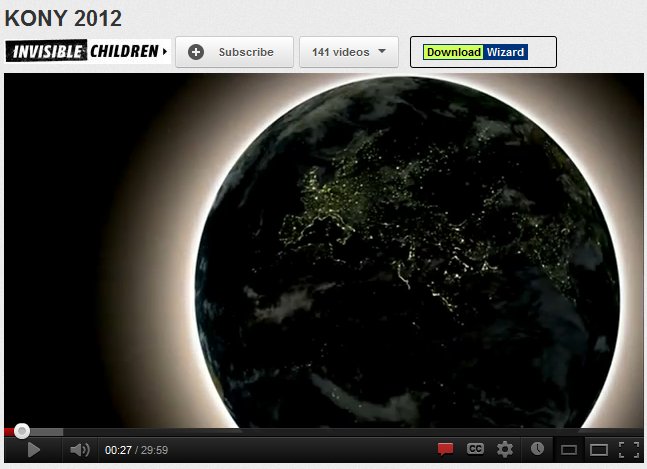
Kony2012: A geographical case study?


A world diminishing in size due to technology


Related sites to the Spatialworlds project
Email contact
manning@chariot.net.au
Where am I??
Adelaide, Australia: S: 34º 55' E: 138º 36'


The Interconnection concept


Following on from the Facebook connections map showcased in the last posting, I thought it worthwhile to explore the Interconnection concepts of the Australian Curriculum Geography. I was further prodded to do so after watching the YouTube video on the Kony2012 initiative.

I kept asking myself, is this geography and could it be used in a geography class?  Is it political geography, cultural geography, human well-being, development geography, demography?  Can such a phenomenon and resource be used as a case study in geography.  To explore this idea I revisited the Interaction concept (one of seven Australian Curriculum: Geography concepts) and had a look at several units which have been written for the draft curriculum released in October 2011 (namely Global Connections and Human Well-being).  So what is the concept of Interconnection according to the draft Australian Curriculum: Geography.

The concept of Interconnection (draft AC: Geography page 9) 

The concept of interconnection, in geography, emphasises that no object of geographical study can be viewed in isolation. It is about the ways that geographical phenomena are connected to each other through environmental processes, the movement of people, flows of trade and investment, the purchase of goods and services, cultural influences, the exchange of ideas and information, political power, international agreements and other types of interaction across space.

• exploring the networks that channel the interconnections between places, and which can advantage some places and disadvantage others
• learning to see their own locality in a wider national and global context, and gaining an understanding of the external factors that influence the locality’s present and future

The concept of interconnection is particular alive and well in the following units of the draft curriculum

The Year 9 unit called Navigating global connections

This unit focuses on the connectedness of Australia with its region and the world. This is explored initially through the eyes of the student and the connections and contacts they have with the wider world in their everyday lives. The unit then looks at the nature of Australia’s connections (with particular emphasis on social and economic connections) and the positive and negative impacts of these connections. The ability of a student to act locally, but with a regional and global view of the consequences is investigated.

Year 10 unit called Global well-being
This unit focuses on the nature of well-being around the world and how can it be measured. Spatial characteristics of well-being and the factors that influence it, and the inequalities that exist at a variety of scales, are used to investigate programs that address issues of well-being.

Content descriptions from unit
There are interrelationships between human well-being and conflict
  • There are significant spatial variations in human well-being within nations, at both regional and local scales 
  • A non-government program which attempts to improve human well-being in another country, and why such programs may be spatially targeted at specific regions within the country
  • People are connected to places across the world through their cultural interests and activities


There are many other places across the draft curriculum where the concept of interconnection is fundamental to the geographic understanding of the topic studied.  I have selected these units because they are particularly pertinent to using the Kony2012 initative as a case study of a geographical phenomenon. So how is the Kony2012 a geographical study. The following quotes from the video have a geographical and interconnection flavour which makes it possible as a geographical study under the guise of cultural geography and political geography in particular. 
  •  “Planet connection through technology.”
  •  “Technology enables us to connect anywhere, anytime ... This connection is changing the way the world works.” In short the video is highlighting the fact that technology is making space diminish through the power of technology leading to increased global interconnection.
  •  “There are more people on Facebook today than there were on the planet 200 years ago.”
  • “Humanities greatest desire is to belong and connect.”
  •  “Where you live should not determine whether you live?
  • “It is not just important for one people but for everyone to capture and stop Kony.
  • “Kony’s name needs to be everywhere.”
  • “Will use 20 culture makers to make Kony famous?
  • “Today the people of the world can see each other and can protect each other.”
  • “The power of media to mobilise the world to act.”
  • “To change the conversation of a culture.”
  • “We are living in a new world, a Facebook world where 750 million people share ideas, not thinking in borders, it’s a global community.”
  • “Arresting Joseph Kony will prove that the world we live in has new rules, that the technology that has brought our planet together is allowing us to respond the problems of our friends – a place where children, no matter where they live have a childhood, free from fear.”

Does this not sound like geography with its spatial and interconnection conceptualisation as discussed in the draft curriculum document? 

For more information on the Kony2012 initiative go to:

As a footnote to this reference to Kony2012 it is worth examining the controversy surrounding this initiative in terms of the recent reports on the use of funds, scamming accusations and the mental health of the film-maker Jason Russell, the driver of Kony2012. A fascinating case study, relevant to geography, populist media in nature, current with layers of truth and purpose.  Surely it can be made a geographical study to engage students and for them to learn about the concept of interconnection...and space.

 The Age of Interconnection: The Anthropocene


Whilst on the concept of Interconnection it is worth referring to the so called new age of the Anthropocene. The Anthropocene is best defined as the new human-dominated period of the Earth's history, the age of interconnection around the globe. 
Technically, the Anthropocene is the most recent period of the Quaternary, succeding to the Holocene. The Quaternary is a period of the Earth's history characterised by numerous and cyclical glaciations, starting 2,588,000 years ago (2.588 Ma). The Quaternary is divided into three epochs: the Pleistocene, the Holocene, and now the Anthropocene.The following links show this interconnection qualities of the Anthropocene rather well.


The term and the concept of the Anthropocene, the idea that human activity affects the Earth to the point where it can cross a new age, is not new and dates back to the late nineteenth century. It seems that the success of the term and its recent currency and adoption is due to the luck of having been made at the appropriate time, when humankind has become more than ever aware of the extent of its impact on global environment.